Strengthening the response to family and sexual violence in Tasmania: A primary care learning initiative including Pathways to Safety workshops and collaborative learning opportunities
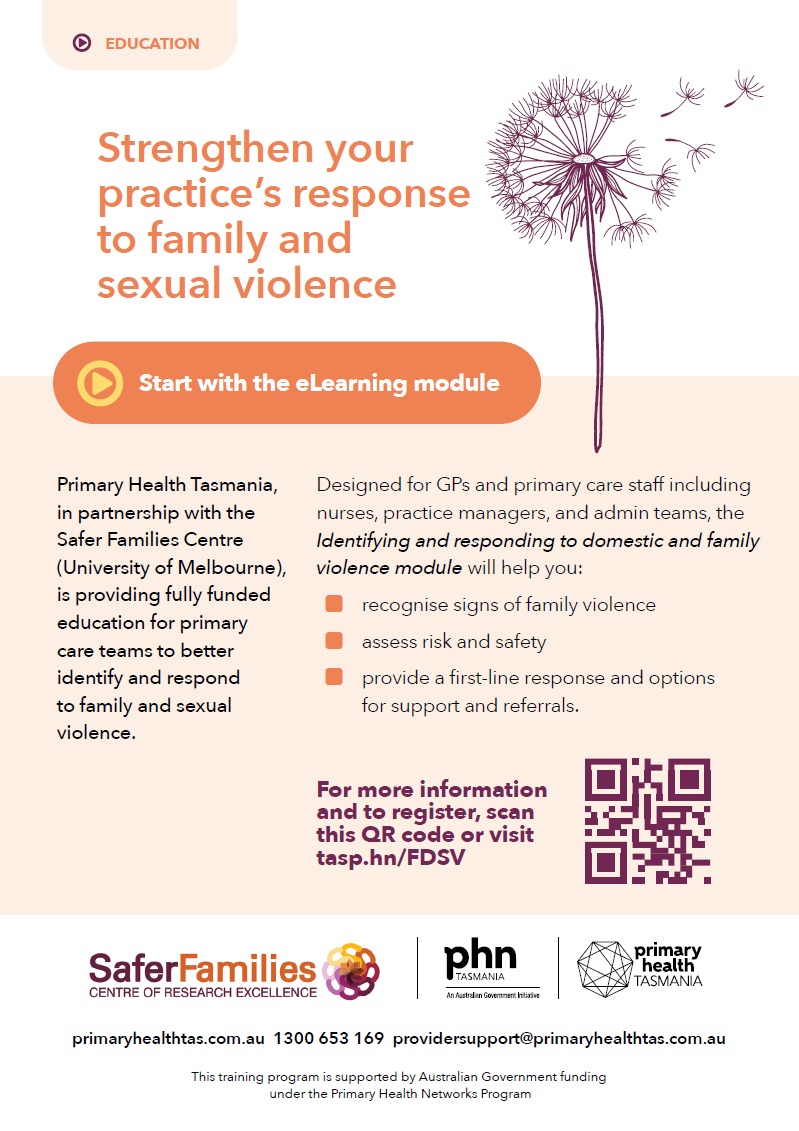
Request free posters for practices by clicking here
Program overview
To strengthen the response the family and sexual violence in Tasmania, Primary Health Tasmania has partnered with Safer Families Centre at the University of Melbourne to deliver education that supports both GPs and GP practice staff and practice managers in Tasmania to identify and respond to family and sexual violence.
GPs and practice staff are often the first people to be told about family and sexual violence, yet many say they feel under prepared. Primary care teams play an important part in creating safe, consistent and trauma- and violence-informed environments. Making sure all staff understand their role supports safer experiences for patients and a more coordinated response.
Why a whole-of-practice approach?
Patients disclose family and sexual violence to primary care more than to any other professional group, and at least one in ten women attending general practice has experienced family violence. A system-wide, whole-of-practice approach ensures every touchpoint, from the first phone call to the clinical consult, contributes to safety, consistency and trauma- and violence-informed care.
In practice, this means shared awareness across reception, administration, nursing and GP roles; agreed enquiry and escalation pathways; safe documentation; and clear connections to specialist services.
What is included in the training?
Workshops
Foundational Pathways to Safety - family and sexual violence face-to-face workshops (rolling out across Tasmania in 2026) with a total of 10 workshops.
- 6 workshops aimed at GPs, practice nurses and other clinical staff (3 hours)
- 4 workshops aimed at practice staff including practice managers, reception and administration staff (2 hours)
Child sexual abuse face-to-face workshops (late 2026) with a total of 8, limited capacity workshops.
Online training
Module 1: Identifying and Responding to Family Violence module – now available
This module focuses on the nature, prevalence and impact of family violence, outlines how and when to ask about this sensitive issue and what to do when a patient discloses.
Module 2: Identify and Respond to Intimate Partner Sexual Violence & Reproductive Coercion module – now available
This module is designed to focus on intimate partner sexual violence. This involves trauma- and violence-informed support, validation of patient experiences, and concurrent safety planning and response to other co-occurring issues in the relationship.
Module 3: Child Sexual Abuse module - under development, please stay tuned for more details.
Who should participate?
All general practice team members: reception and administrative staff, practice managers, nurses and GPs. The learning and tools are designed so that each role contributes within scope to consistent, safer care.
We encourage GP practices in Tasmania to consider, at the minimum, the following practice staff to attend the Foundational Pathways to Safety face-to-face workshops in 2026 (and complete the eLearning modules):
- 1 x practice staff (either reception or administration staff)
- 1 x practice manager
- 1 x general practitioner
- 1 x practice nurse
How to participate:
- Register your team for a Pathways to Safety workshop (choose from clinical and/or non-clinical stream) (details below)
- Complete the eLearning modules (details below)
- Engage with Engender Equality for practice-level support and resources. Primary Care Family and Sexual Violence (PCFSV) Support - Engender Equality
For more information please refer to our FAQ FAQ-Strengthening-response-to-Family-and-Sexual-Violence-in-Tasmania-1.pdf
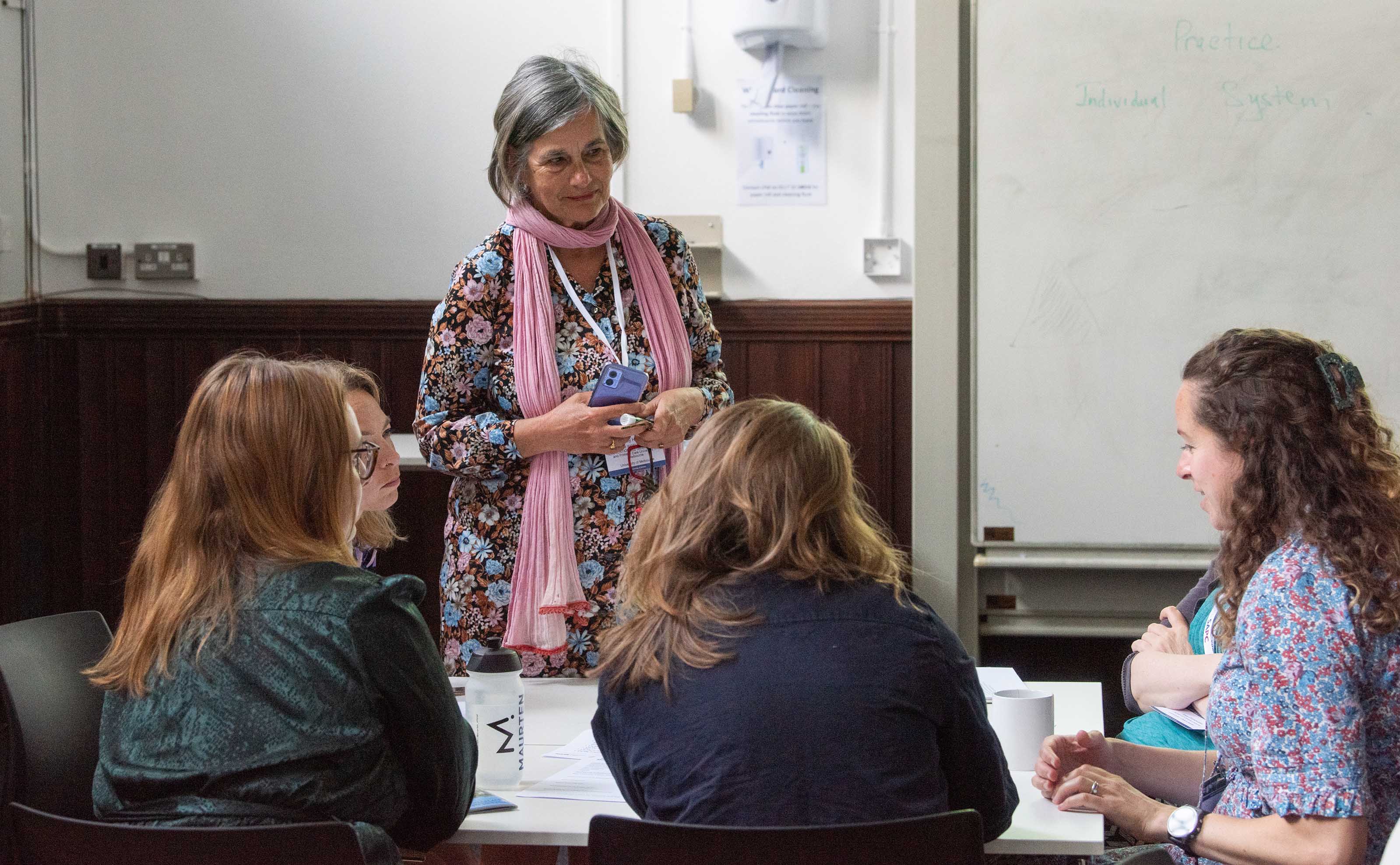
Pathways to Safety workshops will be delivered across Tasmania in 2026, click here to submit an expression of interest for upcoming sessions.

eLearning modules
Module 1: Identifying and Responding to Domestic and Family Violence
Designed for GPs and other primary care providers, the Identifying and Responding to Domestic and Family Violence eLearning module is also relevant for practice managers, reception and administrative staff. The module will enhance your understanding of what can be achieved in the primary care setting to better respond to the needs of patients experiencing family violence. It will assist you in providing a first-line response to patients experiencing family violence, including how to sensitively enquire, assess the level of risk and safety, and understand options for support and referrals.
Learning Outcomes:
- Discuss the nature, prevalence, and impact of domestic and family violence.
- Enquire sensitively to a diverse range of patients about domestic and family violence.
- Assess the level of risk and safety of patients experiencing domestic and family violence.
- Provide a first-line response addressing the needs of patients, including brief safety planning and options for support and referrals.
- Distinguish methods and resources for changing the environment you work in and getting support for yourself.
Module 2: Identify and Respond to Intimate Partner Sexual Violence and Reproductive Coercion
People who experience sexual violence have an increased risk of poor mental and physical health, including chronic conditions, sexually transmitted infections, depression and anxiety. Victim/survivors have greater usage of healthcare systems, and much of this is a result of preventable conditions. As a result, sexual violence costs the economy more than cancer, cardiovascular disease, diabetes or HIV. It is critical that health services rise to the challenge of identifying and responding to sexual violence so that we can reduce the prevalence of trauma, and increase safety for victim/survivors.
Learning Outcomes
- Discuss the prevalence and impacts of intimate partner sexual violence (IPSV) and reproductive coercion and abuse (RCA) in intimate relationships
- Describe the nature and context of various forms of sexual violence and RCA in intimate relationships and explain why it can be difficult to recognise these experiences
- Inquire sensitively to a diverse range of patients about their experiences of IPSV and RCA
- Provide a first line response to patients disclosing IPSV or RCA, including validation of experiences, safety planning and options for support and referrals both nationally and in Tasmania
How to enrol:
- Clicking the Enrol button will take you to an order and enrolment form (you will not be charged)
- Once you complete the forms and check out of your shopping cart, you will receive two confirmation emails from the University of Melbourne (your University of Melbourne order confirmation and invoice for your University of Melbourne order). These emails can be ignored.
- To access the eLearning module please wait for a Welcome to the learning portal email from mobile-learning@unimelb.edu.au and then click the Access here button
- Please check your junk mail if you do not receive your Welcome email within 15 minutes
- Once activated, you can access the module at any time you wish. Please bookmark the learning portal link: https://mlu-portal.mdhs.unimelb.edu.au so you can return to the course whenever required using the login and password provided to you upon enrolment
- Royal Australian College of General Practitioners and Australian College of Rural and Remote Medicine CPD hours for GPs are administered once you have completed the module and answered all the mandatory assessment questions. You can then make a request for a Completion Certificate.
If you have any issues enrolling, please contact mobile-learning@unimelb.edu.au.
*Please note that this is for Tasmanian Healthcare Provider staff ONLY.
*Enter your Practice Name in the ‘Company’ field located in the ‘Billing Address’ section on the next page.
If you would like to know more about Primary Health Tasmania's Strengthening the response to family and sexual violence in Tasmania: A primary care learning initiative including Pathways to Safety workshops and collaborative learning opportunities. Click here